There is no single "best" outdoor furniture material—only the best material for the weather your patio actually endures. Salt air, intense UV, persistent humidity and freeze-thaw cycles each attack furniture differently, so the right choice in coastal Florida can be the wrong one in Arizona. Based on guidance from patio and landscaping specialists, this guide compares five common frame materials—teak, aluminum, synthetic wicker, HDPE lumber and wrought iron—across four climate profiles, so you can narrow your shortlist to two or three candidates and buy with confidence.
Understanding Your Climate: Key Challenges for Outdoor Furniture
Before comparing materials, identify which environmental factor dominates your region, because each profile stresses furniture in a distinct way. In coastal environments, the core problem is salt: marine air corrodes metals and degrades finishes, so salt resistance is the deciding factor. Hot and dry climates such as the American Southwest bring intense UV exposure and heat, which fade finishes and dry out softer woods.
Hot and humid climates combine warmth with constant moisture, and mold and moisture are the key issue to manage, according to Cedar Creek Rustic Furniture's durability guide. Variable climates with real winters add freeze-thaw cycles and snow loads, which can crack brittle plastics and overwhelm frames not rated for the weight.
Today's Patio, an Arizona retailer, frames the practical question well: the best choice depends on your specific climate and maintenance preferences, not on a universal ranking. The same logic applies everywhere—a material's weaknesses only matter where your weather can exploit them.
Comparative Guide to Outdoor Furniture Materials
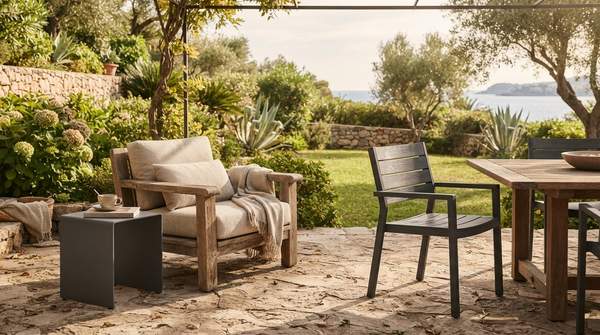
Here is how the five materials stack up. Aluminum is the safest all-rounder: as Melissa Riley explains in Werbrich's Landscaping's guide, cast aluminum naturally resists rust, will not corrode even in coastal environments, and withstands rain, snow and intense sun without degradation, all with minimal maintenance. Teak is the standout wood. Stephen Ramey at Today's Patio notes teak resists shrinking and splitting in dry air better than softer woods and can withstand the elements without any treatment—though it develops a silvery-gray patina as it weathers, which you can counter with occasional oiling if you prefer the golden tone.
HDPE lumber, the recycled-plastic "wood look-alike," is the lowest-maintenance option. Dillon Thompson of Pangaea Patio writes that HDPE will never rot, splinter, crack or require painting, that its color runs throughout the material so scratches are barely noticeable, and that the finish will not fade in the sun. Cedar Creek's comparison table rates HDPE's weather resistance as excellent with no maintenance and a lifespan of 20+ years. Synthetic (all-weather) wicker earns a "very good" weather rating with low maintenance in the same table, though its lifespan runs shorter, at 7–15 years.
Wrought iron is the trade-off material: Cedar Creek rates steel and iron as only "good" when coated, with moderate-to-high maintenance, and Ramey cautions that wrought iron works in hot climates like Arizona only when treated properly—though when it is, it is remarkably durable and stable in windy conditions.
Outdoor Furniture Material Suitability by Climate
The table below synthesizes these documented performance characteristics into an at-a-glance view. Use it to eliminate materials your climate punishes and to shortlist the two or three that fit both your weather and your willingness to maintain.
| Material | Moisture / Rust Resistance | UV / Sun Resistance | Temperature Resilience | Maintenance Needs | Best For |
|---|---|---|---|---|---|
| Teak | Withstands elements untreated; naturally handles salt air | Weathers to a silver-gray patina; appearance preserved with occasional oiling | Resists shrinking and splitting in dry air; handles temperature fluctuations | Low—cleaning plus optional oiling to keep golden tone | Coastal; hot & dry; variable with winter |
| Aluminum | Naturally rust-resistant; will not corrode even in coastal environments | Withstands intense sun without degradation | Handles rain, snow and intense sun; strength stands up to snow loads | Very low to minimal | All four profiles, especially coastal and hot & dry |
| Synthetic wicker | Very good weather resistance | Maintains appearance as an all-weather material | Suitable for general exposure | Low | Moderate climates; hot & dry |
| HDPE lumber | Will never rot or splinter | Finish will not fade in the sun | Handles harshest winters and hottest summers; rated excellent | None—no painting required | Hot & dry; hot & humid; coastal; cold & snowy |
| Wrought iron | Good only when coated; requires upkeep of that protection | Durable and stable when properly treated | Very stable, including wind | Moderate to high | Hot & dry (when treated); windy variable climates |
Note that this comparison covers the frame materials themselves; specific finishes such as paint or powder coating are considered only where a source explicitly tied them to performance. It also deliberately excludes natural wicker, which Cedar Creek's guide flags as a material to avoid in favor of all-weather alternatives.
Choosing the Best Material for Your Climate Profile
Coastal. Salt corrosion rules out standard steel and iron, per Cedar Creek's climate table, which names teak, aluminum and HDPE as the best choices. HARBOUR's materials guide agrees: marine-grade aluminum with specialized coatings offers exceptional salt resistance, and teak naturally withstands salt air while developing a distinctive coastal patina. Pick two of the three—say, powder-coated aluminum frames with teak accents—and you are covered.
Hot and dry. Cedar Creek recommends cedar, aluminum, HDPE and wicker here, warning against dark metals and unsealed wood because UV damage and heat are the key issues. Teak also earns a place: Ramey highlights its resistance to shrinking and splitting in dry air. Aluminum, HDPE and teak give you three strong options spanning maintenance levels.
Hot and humid. The best choices are teak, aluminum, HDPE and sealed cedar, with unsealed wood and standard steel to avoid, since mold and moisture dominate. Aluminum and HDPE are the practical picks—neither offers anything for mildew to feed on—and teak works if you accept its patina.
Variable with winter. Cedar Creek lists cedar, HDPE, aluminum and teak as best, with brittle plastics and unsealed wood as the materials to avoid under freeze-thaw cycles. HARBOUR adds that aluminum's strength withstands winter snow loads and that proper covers extend furniture life through harsh winters. HDPE again leads: Thompson describes it as standing up to the harshest winters with no maintenance.
A Note on Cushions and Fabrics
Frames are only half the system. Cedar Creek's guide turns next to cushion and fabric choice, and the stakes are highest in hot, humid climates, where moisture and mold are the key issue for the furniture—cushions that hold water will fail long before a good frame does. Its hot-and-humid profile applies to soft goods the same logic as to wood: choose materials that do not trap moisture. This article's comparison covers frames only, so treat cushion construction as its own decision.
Making Your Final Selection: A Climate-Smart Decision
Homeowners should prioritize outdoor furniture materials that directly address the dominant environmental challenges of their specific climate, balancing durability with desired maintenance levels. In practice that means: aluminum or marine-grade aluminum near salt water; aluminum, HDPE or teak under intense desert sun; aluminum or HDPE where humidity breeds mold; and HDPE, aluminum or teak where freeze-thaw cycles and snow rule out brittle plastics and unsealed woods. Keep the stated trade-offs in mind—teak's patina, wicker's shorter lifespan, wrought iron's coating upkeep—and match them to your maintenance tolerance, not just your weather.
These recommendations reflect general climate profiles, not microclimates or extreme weather events, and price is intentionally out of scope since costs vary widely by brand, design and retailer. Your measurable check is simple: the longevity and aesthetic condition of the chosen furniture material after one full year of exposure to the local climate, with minimal unexpected maintenance or degradation. If your pick passes one full year of local weather—patina aside—without surprises, it was the right material for your climate.
Sources
- Best Outdoor Furniture Materials: Durability & Care Guide — Cedar Creek Rustic Furniture
- Best Outdoor Furniture for Hot Climates: What to Look for in Arizona & — Today's Patio
- Elevate Your Outdoor Space: Styling Your High-Quality Outdoor Furniture - Werbrich’s Landscaping
- 8 Durable Outdoor Furniture Materials To Consider — Pangaea Patio
- A Guide to Premium Materials for Lasting Outdoor Furniture – HARBOUR — Shopharbour