A basic home rainwater harvesting system for garden use comes down to five working parts: a catchment surface (usually your roof), gutters and downspouts to convey the water, leaf screens and a first-flush diverter to clean it, a storage tank or cistern to hold it, and a delivery system—gravity-fed or pumped—to get it to your plants. Beyond the initial cost of installation, the water itself is free, and the Oregon State University Extension Service notes that rainwater tends to be pure, soft (with fewer salts than city or well water), and near neutral pH. This guide covers non-potable systems for garden and outdoor use only; it does not address local codes, permitting, or advanced purification.
Understanding Rainwater Harvesting for Your Garden
Rainwater harvesting captures the rain that already falls on your roof and stores it for later irrigation. According to OSU Extension, the easiest and most common approach for homeowners combines a roof, gutters or roof drains, and piping that conveys the water to and from storage. The benefits go beyond a lower water bill: capturing and storing rainwater helps reduce the intensity and flow of stormwater runoff, and irrigating with it helps flush salts out of lawn and garden soils. A consistently used 50-gallon system can offset hundreds to thousands of gallons of treated municipal water annually, depending on your rainfall and how much you water, according to guidance from The Home Depot's Eco Actions program.
Essential Components of a Rainwater Harvesting System
OSU Extension lists the investments a full system requires: a catchment surface (usually a roof), gutters and downspouts, leaf screens, a first-flush diverter with primary filtration to remove debris and contaminants before water reaches the storage tank, the storage tanks or cisterns themselves, and a delivery system that is either gravity-fed or pumped. Treatment or purification is optional—and unnecessary for non-potable garden use. Before investing, OSU Extension advises determining how much water you actually need, especially during the dry summer months, and using local rainfall data to check whether your catchment area can realistically meet that demand given your garden's size.
Catchment and Conveyance: From Roof to Gutter
The roof is the primary collection surface, and its material can affect water quality: metal roofs harbor fewer contaminants than asphalt shingles, though asphalt is acceptable for garden use. Proper installation of gutters and downspouts ensures efficient water flow and minimizes debris accumulation along the path from roof to tank. Together, these two stages determine both how much water you can collect and how clean it is when it arrives at filtration. A well-fitted gutter system also protects everything downstream—clogged or leaking conveyance is one of the most common points of failure in a home setup.
Filtration: Keeping Your Water Clean
Filtration happens in two stages. Leaf screens remove larger debris—leaves, twigs, and blooms—before water enters the system, and regular cleaning of these screens is essential to prevent blockages and maintain efficiency. The first-flush diverter handles the finer problem: the initial sheet of runoff from a roof carries smaller contaminants such as dust, pollen, and animal feces. The diverter automatically captures that initial flow in a separate standpipe chamber, letting only the cleaner water that follows fill your barrel; the standpipe slowly drains through a small outlet over the next few hours, and every subsequent rain event resets the process automatically. The Home Depot's guidance recommends sizing the first-flush chamber at roughly one gallon per 100 square feet of roof surface, a step it flags as especially important for vegetable gardens or edible herbs.
Storage and Delivery: Holding and Using Your Harvest
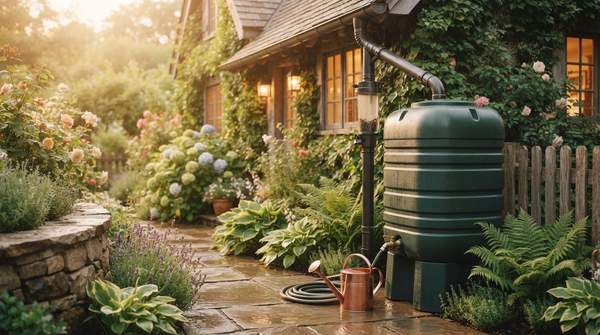
Storage tanks, or cisterns, hold the harvested water until your garden needs it. Tanks should be covered with fine mesh screens to prevent insect entry and algae growth, and periodically drained and cleaned to remove sediment. Delivery is the final stage: water moves to the garden either by gravity or with a pump, and the right choice depends on your garden's layout and the water pressure your irrigation method requires. Gravity-fed systems are simpler and cheaper but need elevation—a tank on a stand or uphill of the beds—while a pump adds cost and complexity in exchange for pressure that drip lines and hoses may need.
Rainwater Harvesting System: Component Flow and Function
The table below traces rainwater through the system in sequence, showing what each stage does and what to watch for at that stage.
| Stage | Component | Function | Key Consideration |
|---|---|---|---|
| Catchment | Roof | Primary surface for collecting rainwater | Roof material affects water quality; metal harbors fewer contaminants than asphalt, though asphalt is acceptable for garden use |
| Conveyance | Gutters and downspouts | Direct rainwater from the roof to storage | Proper installation ensures efficient flow and minimizes debris accumulation |
| Filtration | Leaf screens | Remove larger debris like leaves, twigs, and blooms | Regular cleaning prevents blockages and maintains efficiency |
| Filtration | First-flush diverter | Captures initial runoff carrying dust, pollen, and animal feces so only cleaner water reaches the tank | Periodic cleaning keeps it effective; size at about one gallon per 100 sq. ft. of roof |
| Storage | Tank or cistern | Holds collected water for later garden use | Cover with fine mesh to block insects and algae; drain and clean periodically to remove sediment |
| Delivery | Gravity-fed or pumped system | Distributes stored water to the garden | Choice depends on garden layout and water pressure needs |
Planning Your Rainwater Harvesting System: A Checklist
Work through these decisions before buying anything:
- Assess your water needs. Estimate how much water your garden requires, especially during the dry summer months, as OSU Extension recommends.
- Estimate your potential collection. A common formula is: roof area (sq ft) × rainfall (inches) × 0.623 (gallons per square foot per inch) × an efficiency factor of 0.75–0.90 = gallons collected. For example, a hypothetical 1,000-square-foot roof receiving 30 inches of annual rain at 0.80 efficiency would yield roughly 14,950 gallons per year. This is an estimate; actual collection varies with evaporation and system losses.
- Consider roof material and size. Your catchment area and roofing type determine both volume and water quality.
- Plan for debris and contaminants. Include leaf screens and a first-flush diverter sized to your roof area.
- Determine appropriate uses. Collected rainwater suits garden and outdoor irrigation; this guide does not cover potable use.
- Check local rules. Building codes, regulations, and permitting vary by location and are outside this guide's scope.
Maintenance for Longevity and Water Quality
A simple schedule keeps the system working. Best practice, as described by the Texas Water Newsroom, is to check and clean any screen filters every 2 to 3 months, and every 6 months to clean your gutters and downspouts, rain heads, and first-flush diverter. As you get to know your system, you can adjust that schedule to your conditions. Water quality depends on roof cleanliness and the surrounding environment, so regular cleaning of roofs and gutters prevents contaminants from reaching the tank, and water should be tested for its intended use. Maintenance requirements vary based on system design and environmental conditions.
Making the Decision: Is Rainwater Harvesting Right for Your Garden?
Homeowners can effectively implement a basic rainwater harvesting system for garden use by understanding its core components, planning for their specific needs, and committing to routine maintenance. The upfront work is a one-time setup: once the catchment, conveyance, filtration, storage, and delivery stages are in place, every rainstorm refills your supply automatically. A successful system will consistently provide a supplemental water source for the garden, reducing reliance on municipal water and demonstrating improved plant health during dry periods. If your roof area and local rainfall data suggest you can collect enough to meet your garden's dry-season demand, the next step is sizing your tank and first-flush diverter to that estimate.