You can keep favorite annual flowers alive through winter by either digging up the whole plant and repotting it as a houseplant, or by rooting stem cuttings indoors. The right choice depends mainly on the plant: geraniums, wax begonias, lantana, and verbena are good candidates for digging up whole, while coleus, impatiens, petunias, and fuchsias root readily from cuttings. Timing matters too—plants must come indoors before frost. This guide walks through the decision, the full transplanting process, and the indoor care that carries your plants to spring.
Decision Framework: Choosing Your Overwintering Method
The two methods serve different plants and different goals. Transplanting preserves the original plant, including its mature size and root system, but requires space and a bright window. Cuttings produce smaller, fresh new plants and often root easily in water or a rooting medium, which makes them practical when a whole basket or bed would be too large to accommodate indoors.
Denny McKeown's Bloomin Garden Centre, a nursery whose guidance organizes annuals by method, notes that annuals that do well indoors are limited to a specific group—coleus, impatiens (including New Guinea types), nasturtium, pansy, petunia, verbena, wax begonia, lantana, and geraniums—with coleus and geraniums being the easiest. The nursery's rule of thumb: geraniums can simply be cut back and brought in whole, but for coleus it is better to start with stem cuttings. The matrix below applies that guidance, along with rooting observations from other horticultural sources, to the most common annuals.
| Annual | Recommended method | Key considerations |
|---|---|---|
| Geranium | Dig up, repot, cut back by half | Place in a sunny window; among the easiest annuals to keep indoors |
| Wax begonia | Dig up and repot, or take cuttings | Sunny window; easy-care indoors but avoid overwatering |
| Coleus | Take stem cuttings | Roots easily; whole plants get very leggy indoors even in direct sun |
| Impatiens (including New Guinea) | Take stem cuttings | Root easily in water; a mature plant can also be pruned back and brought in |
| Petunia | Dig up and repot, or take cuttings | Both methods work; sunny window for transplants |
| Fuchsia | Take stem cuttings | Roots easily in water; prefers cool, somewhat humid conditions, such as under grow lights |
| Lantana, Verbena, Alyssum, Pansy | Dig up, repot, bring inside | Sunny window; pansies need sun but a cool area of the house |
| Nasturtium | Take stem cuttings | Root in sand, vermiculite, or perlite |
Use the table to match your plant to a starting approach, then factor in your own situation. If you want to preserve a large, established plant and have a bright south-facing window, transplanting suits geraniums and begonias well. If your goal is compact, vigorous new plants—or your specimen is too sprawling to carry inside—cuttings are the better path, especially for coleus and impatiens. As the Bloomin Garden Centre guidance puts it, gardening is about experimenting, so trying any annual you like carries little risk: if it fails, that was its fate at frost anyway.
Step-by-Step Guide: Transplanting Whole Annuals Indoors
Transplanting works best as a sequence completed before the first frost. Each step below draws on the horticultural guidance gathered here, including the Simcoe County Master Gardeners' preparation advice.
- Inspect for pests first. Before anything comes inside, check the soil for weeds and bugs, and examine leaves and stems closely. The Simcoe County Master Gardeners advise that infested plants be washed with water or treated with insecticidal soap, and that heavily infested plants simply be discarded rather than brought indoors, where pests can spread to your houseplants.
- Prune for size and shape. Trim the plant back to manage its size for indoor conditions and promote fresh, fuller foliage. Geraniums, for instance, are cut back by half when brought in, according to the Bloomin Garden Centre guidance.
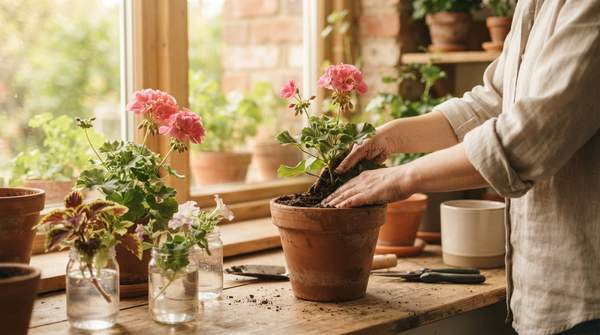
- Dig up the plant and clean the roots. Lift the plant with as much of the root ball as practical. The Master Gardeners describe the safest approach for bringing a plant in as a houseplant: completely remove it from the garden soil, wash the roots, and repot. For plants already growing in containers, the original soil can be amended rather than fully replaced.
- Repot with fresh soil. Pot the plant into a container with fresh potting mix, water it well, and place it in a sunny window—southern exposure is the critical requirement the nursery guidance emphasizes, and a bright basement window can serve if that is where your best light is.
- Acclimate gradually. Just as plants moved outdoors in spring need slow adjustment, expect an adjustment period indoors as plants respond to lower light and drier air. Some leaf discoloration or drop during this transition is normal.
For gardeners choosing cuttings instead, the process is simpler. Water the parent plant well a few hours before cutting, then take a few stems about two inches long and place them in sand, vermiculite, or perlite—impatiens and fuchsias will also root easily in plain water, as grower Audrey Stallsmith, who overwinters both, reports from her own practice. Keep the cuttings moist, fertilize at half strength, and transplant each to an individual pot once roots reach about two inches long.
Ongoing Winter Care for Overwintered Annuals
Indoor care for overwintered annuals is modest but specific, and the Illinois Extension, whose guidance centers on keeping annuals alive as semi-dormant houseplants, sets realistic expectations: overwintered annuals will look rough for much of winter, constantly dropping leaves and getting leggy, and success varies by plant. They survive as live but semi-dormant plants, not as the lush specimens you enjoyed outdoors.
Light. A sunny window with southern exposure is the essential requirement for most of these annuals; geraniums, which are perennials in the tropics, depend on it. Fuchsias prefer cool, somewhat humid conditions and can do well under basement grow lights, where Stallsmith reports hers blooming in late December. Some plants need a lot of light and some don't, so watch your plant's response and adjust.
Water. Keep the soil just moist, in the Illinois Extension's phrasing, without letting the potting medium shrink and pull away from the pot edges. The opposite extreme is the greater danger: Stallsmith cautions from experience not to overwater during winter, having lost favorites—including a double-flowered wax begonia—to root rot. Water thoroughly, then let the surface dry before watering again.
Fertilizer and flowering. Fertilize at half strength while plants are in active growth, per the nursery guidance for rooted cuttings. Expect some flowers rather than heavy bloom: fuchsias and other annuals won't bloom as heavily indoors as they do outside, but they will produce some flowers under the right conditions.
Managing leggy growth. Even with lots of direct sun, coleus will get very leggy indoors, the Master Gardeners note. Their remedy doubles as a propagation opportunity: in early spring, snip the long shoots off and root them in water to create fresh, full plants. The Illinois Extension adds a spring schedule—when other indoor plants resume growth, prune overwintered annuals back to four to six inches, gradually give them more light, and move them outside once it is safe. After three or four years, the potting mix of large annuals compacts; at that point, repot with fresh mix in a slightly larger pot, or prune the roots and reuse the same pot.
One boundary worth repeating: this guidance covers tender annuals kept as live houseplants. It does not apply to storing dormant tubers, corms, or bulbs such as dahlias or gladioli, which need a different winter treatment, nor to hardy annuals or perennials. Care also varies somewhat by species and by your home's light, temperature, and humidity.
Successfully Overwintering Annuals: Your Winter Garden Awaits
By following the appropriate method—transplanting or cuttings—and providing consistent indoor care, homeowners can successfully extend the life of their favorite annual flowers through winter. The payoff is both practical and satisfying: plants saved in fall mean less money spent on replacements in spring, and cuttings taken along the way can multiply your stock for free.
The measure of success is concrete: healthy, pest-free annual plants exhibiting new growth or maintaining foliage indoors by late winter, ready for their spring return outdoors. Watch for that new growth after the winter solstice as light returns, prune back in spring, and acclimate your plants to outdoor conditions gradually—your garden's Phoenix-like recovery, as the Illinois Extension describes it, will be underway.