Home Insulation R-Values: Navigating 2026 Codes for Optimal Efficiency
Where R-38 insulation is required in the ceiling or attic, R-30 can satisfy the requirement if installed over 100 percent of the area and extending over the wall top plate at the eaves, according to Up Codes. Meeting 2026 insulation R-values isn't always about the highest number.
Homeowners want maximum energy efficiency, but building codes often present complex, contradictory minimums and exceptions. These rules create confusion about effective installation and climate suitability.
Effective insulation means understanding both mandated R-values and practical installation. A 'one-size-fits-all' approach won't deliver optimal home performance.
Why Your Home's R-Value Matters
Your home's R-value measures thermal resistance, directly impacting energy use. While the minimum wall insulation R-value is R-13 in all climate zones, according to up.codes, this universal minimum is often insufficient for practical energy efficiency. In Zone 4 and above, codes demand R-30 insulation in wall cavities or continuous insulation, per Benjamin Obdyke. This means relying only on R-13 likely leads to under-insulation, as colder climates require higher R-values or continuous insulation for optimal performance.
R-value is a regulated standard, not an arbitrary number. It varies by location and application, directly affecting energy consumption and comfort. Effective R-value also depends on installation quality, not just the material itself.
Climate Zones Dictate Your Insulation Needs
Climate zones directly determine insulation levels. In Zone 3, uninsulated wood-frame walls should add R5 insulative wall sheathing during siding replacement, according to Energy Star. R5 insulative wall sheathing improves thermal performance. For colder Zones 4 through 8, insulated 2x4 wood-frame walls require R10 insulative wall sheathing under new siding, also per Energy Star. Existing insulated walls still need supplementary measures in harsher climates. Basement or crawlspace walls in Zones 4A and 4B similarly need R10 insulative wall sheathing or R13 batt insulation.
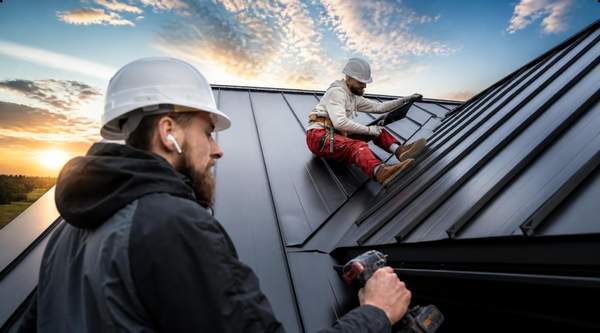
Different parts of a home in varying climate zones demand tailored insulation strategies. These often require specific upgrades beyond simple cavity fills, emphasizing a nuanced approach to home energy efficiency.
Understanding Insulation Material R-Values
Insulation material choice significantly impacts achievable R-value. Polyiso insulation offers R-6 per inch, according to Rmax, making it ideal for limited spaces. Fiberglass, however, performs at R3.7 per inch, also per Rmax. This R-value difference makes material selection a fundamental design constraint, not just a cost decision. Space limitations often force builders to choose more expensive, higher-density materials to meet code minimums.
Navigating Installation Challenges and Code Exceptions
Structural limitations impact R-value requirements. For roof or ceiling assemblies lacking space for insulation greater than R-30, the minimum R-value reduces to R-30, according to up.codes. This acknowledges construction constraints, but such reductions are limited to 500 square feet (46 m2) or 20 percent of the total insulated ceiling area, whichever is less, also per up.codes. Reductions limited to 500 square feet (46 m2) or 20 percent of the total insulated ceiling area prevent widespread under-insulation. In walls, if R-30 is unachievable in the cavity, continuous insulation at a minimum 1-inch thickness becomes mandatory, according to Benjamin Obdyke.
Building codes balance feasibility and thermal efficiency by offering allowances and alternative solutions like continuous insulation. These provisions maintain performance standards despite structural limitations.
Optimizing Your Home's Thermal Envelope
Optimizing your home's thermal envelope means going beyond minimum R-value compliance. Install continuous insulation to reduce thermal bridging, according to Rmax. Thermal bridging allows heat to bypass cavity insulation through structural elements like studs. Continuous insulation provides a uniform thermal resistance layer, significantly improving energy performance. This method tackles a critical issue cavity insulation alone cannot, especially in colder climate zones. Prioritizing continuous insulation is key to achieving superior, consistent energy efficiency.
Evaluate not just R-value per inch, but also installation methods and interaction with your home's structure. This comprehensive approach ensures long-term energy savings and improved indoor comfort.
Common Questions About Home Insulation
What is a good R-value for home insulation in 2026?
A good R-value depends on your climate zone and home area. Attics often need R-38 to R-60 in colder climates. Walls typically target R-15 to R-21, especially with continuous insulation, for effective thermal envelopes.
Can I install home insulation myself in 2026?
Many homeowners can install insulation like fiberglass batts. However, specialized types like spray foam or dense-packed cellulose require professional equipment and expertise. Always consult local building codes and safety guidelines before starting.
The Bottom Line on Home Insulation
By 2026, homeowners who strategically navigate insulation codes, material choices, and installation methods are likely to achieve significant energy savings and enhanced home comfort.