The best privacy solution for your glass door is the one that still blocks the view after sunset, and that rules out the most popular flashy option. Reflective "one-way mirror" films deliver excellent daytime seclusion, but they can reverse at night: with your interior lights on and the outside dark, passersby may see in while you see only your own reflection. Frosted films, blinds sealed between the glass panes, and switchable smart glass avoid this trap, because their privacy doesn't depend on which side is brighter.
Understanding Glass Door Privacy: Day vs. Night
Every privacy treatment works by doing one of three things: scattering light, reflecting it, or physically blocking it. The difference matters at night. Scattering and blocking keep working no matter where the light comes from. Reflecting, however, only works when the outside is brighter than the inside.
Window Film Depot's guide to privacy film explains that these products are designed to obscure visibility while still allowing natural light to filter through, in styles such as frosted, etched, and patterned designs. Smart Films International describes the same physics from the glass side: reflective privacy glass uses a coating to create a one-way mirror effect, and "during the day, it reflects more light on the exterior side, providing privacy to occupants. However, at night, with interior lights on, visibility from the outside may increase."
So the real question isn't which film looks private in the showroom or at noon. It's which one still looks private from your sidewalk at 9 p.m. with the kitchen lights blazing.
Frosted and Decorative Films: Aesthetic Obscurity
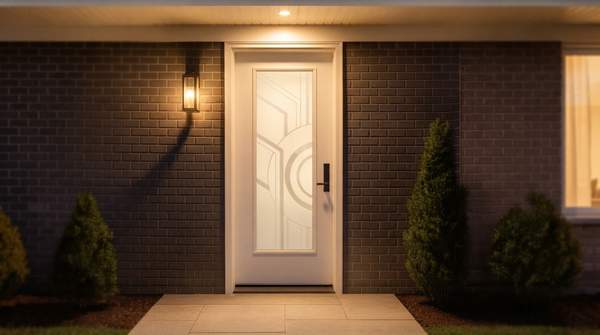
Frosted film is the workhorse of glass door privacy, and it's the safest choice for light retention. CoolVu's homeowner guide describes frosted films as blurring shapes and details while keeping rooms bright and airy, and notes that they provide total privacy while allowing natural light in spaces "where complete privacy matters day and night." Options include solid frost, gradient frost (a clear-to-frosted transition), and patterned frost, so you can match your door's style rather than fight it.
Because a frosted film diffuses light rather than relying on exterior reflection, its blur effect doesn't switch off after dark. Interior light still scatters through the frosted surface, so silhouettes stay indistinct at night — in contrast to the reflective films described in the next section, whose effect reverses.
For renters or the commitment-averse, static cling films are a temporary option. CoolVu notes they need no glue and remove without residue, though they lack the durability and performance of professionally installed films. Application is straightforward enough to DIY — Bloomin' Blinds' DIY frosted glass guide highlights customizing opacity and patterns — but careful application matters for a clean, bubble-free result.