How to Create a Drought-Tolerant Garden for Sustainable Outdoor Spaces

Imagine a garden that only needs weeding and trimming three times a year, while also saving 50% to 90% on your water bill.

MC
Mason Clarke

May 15, 2026 · 4 min read

A beautiful, thriving drought-tolerant garden with native plants, demonstrating sustainable and low-maintenance outdoor living.

Imagine a garden that only needs weeding and trimming three times a year, while also saving 50% to 90% on your water bill. Outdoor living redefines home maintenance, transforming what was once a constant chore into a remarkably efficient system. For homeowners looking to create a drought-tolerant garden in 2026, this offers both ecological benefits and significant personal convenience.

Homeowners often associate beautiful gardens with high water and labor demands. However, xeriscaping proves that stunning outdoor spaces can be both sustainable and remarkably low-maintenance, directly challenging traditional gardening perceptions.

As climate concerns grow and technological innovations emerge, xeriscaping is poised to become the standard for residential landscaping, offering both ecological benefits and significant personal convenience.

Xeriscaping involves designing and implementing a landscape that utilizes plants, terrain, and water together, reducing the need for high amounts of supplemental water, according to Davey. Xeriscaping redefines gardening from a water-intensive chore to an integrated, sustainable system. By considering the entire outdoor space as an interconnected unit, homeowners can optimize resource use from the outset.

Beyond Just Saving Water: The Broader Benefits of Xeriscaping

Xeriscape yards typically require weeding and trimming only three times a year, according to CalRecycle. The drastically reduced labor demand transforms outdoor maintenance from a weekly task to an occasional one, offering homeowners significant time savings. Homeowners clinging to traditional high-water, high-labor landscapes are effectively choosing to pay 50-90% more on their water bills and dedicate significantly more time to yard work than necessary, based on CalRecycle's data. Xeriscaping, therefore, offers a substantial return on investment through reduced labor, lower utility bills, and a more resilient landscape.

Designing Your Drought-Tolerant Oasis

Grouping plants in the correct water-usage zones (high, moderate, low) can help maximize and target irrigation, according to ResearchGate. Strategic placement ensures each plant receives only the water it needs, preventing waste and promoting healthier growth. Native species are also recommended for xeriscaping as they naturally reduce maintenance, water needs, and chemical applications, ResearchGate reports. Combining these strategies—grouping plants by water needs and prioritizing native species—creates a synergistic effect, further amplifying water savings and minimizing external inputs for a truly self-sufficient system.
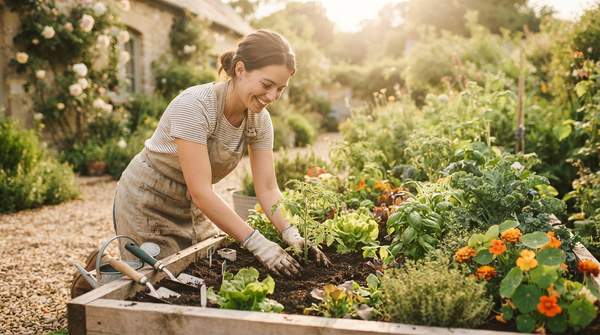
Thoughtful planning around plant selection, grouping, and soil preparation is crucial for a successful and truly low-impact xeriscape. Understanding the specific needs of chosen plants and how they interact with the local environment minimizes the need for external inputs.

One common area of confusion in xeriscape design involves soil organic matter. While the ideal amount of organic matter for most xeriscape soils is just 3-5%, according to Engagement, practices like grasscycling are often recommended. Grasscycling leaves mowed clippings on your lawn to fertilize and hold in water, which adds organic matter. A potential conflict arises where traditional lawn sustainability practices might need careful adaptation to avoid exceeding the low organic content desired for strict xeriscape designs. Homeowners must plan carefully, balancing conventional wisdom with specific xeriscape requirements.

Smart Strategies for Water-Wise Gardens

Installing drip irrigation can save 50% to 90% of water usage, according to CalRecycle. Drip irrigation ensures water reaches plant roots directly, minimizing evaporation and runoff. Beyond efficient irrigation, innovative technologies are also emerging to further optimize water management.

The Royal Horticultural Society (RHS) is trialing AI-enabled water butts that can self-empty based on weather forecasts, which could be available on the market soon, The Guardian reports. The trial of AI-enabled water butts suggests that future sustainable landscaping will integrate smart technology, pushing xeriscaping beyond passive design to actively optimized resource management. Integrating smart technology and simple practices can dramatically enhance water conservation and garden efficiency.

Beyond Flowers: The Rise of Edible Landscapes

What are the emerging trends for drought-tolerant gardens in 2026?

In 2026, the Royal Horticultural Society (RHS) predicts that tabletop vegetable plants will replace bouquets of cut flowers as a top garden trend. The shift to tabletop vegetable plants signals a growing demand for functional, sustainable outdoor spaces, even in compact urban environments.

Why are compact edible plants gaining popularity in drought-tolerant gardens?

Plant breeders and nurseries are developing compact cultivars of small vegetable plants, creating an expanding market, according to The Guardian. These varieties offer good quality produce that is easy to grow and visually appealing, aligning with the low-maintenance principles of xeriscaping. The convergence of sustainability, functionality, and aesthetic appeal positions compact edibles as a key trend, demonstrating that even small spaces can contribute to a home's self-sufficiency and ecological footprint.

If current trends continue, the integration of smart technology like AI-enabled water butts and the rise of compact edible landscapes will likely establish xeriscaping as the definitive standard for future-proof residential design.