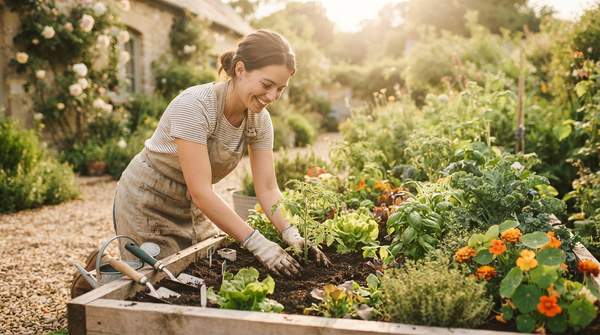
A productive and beautiful kitchen garden, brimming with fresh vegetables, fragrant herbs, and vibrant flowers, is an achievable goal for any homeowner willing to invest in a thoughtful plan. By systematically assessing your space, selecting plants suited to your conditions, and using a structured layout, you can cultivate a garden that is both a reliable source of fresh ingredients and a stunning enhancement to your outdoor living area. This guide provides a step-by-step framework to help you design a functional and attractive kitchen garden, centered on a concrete, adaptable plan for the popular and manageable 4x8 foot raised bed.
Planning Your Kitchen Garden: A Step-by-Step Approach
The modern kitchen garden, often called a potager, is a space designed for both utility and beauty. This approach moves beyond simple rows of vegetables to create an integrated, visually appealing landscape. A structured layout, such as a system of raised beds organized by paths, lends a formal, tidy appearance. This style encourages mixing edible plants with ornamental flowers, resulting in a display that is as delightful to look at as it is to harvest from. A clear plan is the foundation for making the most of your available space and ensuring your efforts lead to a rewarding outcome.
Before purchasing a single seed, the first step is to choose the right location. Accessibility is paramount for a garden you intend to use frequently. Sarah Mead, the head gardener at Yeo Valley Organic Garden, offers a simple but crucial piece of advice: “‘Choose an area you can get to easily.’” A garden close to your kitchen door is one you will visit often, making it simple to snip fresh herbs for a recipe or gather greens for a salad. This convenience also encourages consistent care, as daily tasks like watering, weeding, and monitoring for pests become part of your routine rather than a chore.
It is also wise to begin with a manageable size. While the 1,500-square-foot White House Kitchen Garden is an inspiration, a document from that project advises new gardeners to start small. An overly ambitious garden can quickly become overwhelming, leading to neglect and disappointment. Sketching out a simple design first helps you visualize the space and allocate room for each plant. Raised beds or containers are excellent options for beginners, as they provide defined planting areas, offer superior control over soil quality, and tend to warm up faster in the spring, giving your plants a healthy start.