The right underlayment choice comes down to a trade-off: foam is the cheapest and most common option but compresses over time and handles sound poorly; cork offers balanced performance—good acoustics, natural insulation, and mold resistance—at a moderate price; and rubber delivers superior, long-lasting sound dampening at a premium cost. Which one belongs under your floor depends on where the room sits, what sits on top of the underlayment, and which outcome—budget, quiet, or warmth—matters most to you.
Understanding Underlayment: Why It Matters
Underlayment is the thin layer installed between your subfloor and your finished flooring, and flooring professionals describe it as one of the most overlooked parts of a remodel. Writing for The Kitchen People, a kitchen and flooring blog, puts it bluntly: it is "the underlayment—not the flooring—that decides whether your floors feel premium or cheap." In practice, that hidden layer determines how quiet your floors sound, how warm they feel, whether moisture reaches your flooring, and how long the floor holds up.
The three most common roll or sheet options are quite different materials, as the installers at Potomac Floors explain in their 2026 comparison guide. Cork underlayment is sheets or rolls of compressed natural cork granules. Rubber underlayment is recycled or virgin rubber formed into dense mats. Foam composite is closed-cell polyethylene foam, often with a film vapor barrier and sometimes a thin cork or rubber layer laminated in. All three sit between the subfloor and the flooring, but they perform very differently.
Cork Underlayment: Natural Performance and Value
Cork earns its reputation as the balanced, all-around option. Its cellular structure absorbs footsteps, voices, and appliance noise, making it a capable sound dampener, and it traps heat exceptionally well—a genuine natural insulator that adds warmth underfoot. That combination suits cold-climate homes and rooms where comfort underfoot matters.
Cork also resists mold and mildew and holds its shape over the years, according to The Carpet Stop, an Austin flooring retailer. It usually costs more than foam, though many homeowners find the quieter, firmer feel worth the difference. In practice, installers describe cork as the better value in a typical condo where the acoustic spec is a standard IIC 50—one caveat: cork products may not include an integrated vapor barrier, so a separate moisture barrier is needed over concrete slabs.
Foam Underlayment: The Budget-Friendly All-Rounder
Foam composite is the most common and cheapest of the three, and it comes in several densities, from basic rolls to upgraded acoustic versions. It is soft and pleasant underfoot, easy to install, and well suited to DIY projects and simple remodels. Its strongest practical feature for many projects is that most foam composites include a built-in film vapor barrier—which is exactly what basement luxury vinyl plank over a concrete slab needs, with acoustic performance as a secondary benefit.
The trade-offs are real, though. As The Kitchen People's comparison notes, foam compresses over time, absorbs sound poorly compared with cork or rubber, and provides limited thermal insulation. It is not ideal for long-term moisture exposure or high-impact noise reduction. Installers at Potomac Floors frame the choice honestly: pick foam composite when the budget is tight and you accept that the underlayment will need replacing at the next floor cycle—such as in single-family homes where impact noise is not a constraint, or rental turnover floors where cost per unit matters.
Rubber Underlayment: Premium Soundproofing and Durability
Rubber is the premium, heavy-duty option. Dense rubber mats are excellent at dampening impact noise—footsteps, pets, dropped items—and rubber does not compress, degrade, or crumble over time. It is also nearly completely waterproof, which makes it suitable for basements and below-grade renovations, and while it is not as warm as cork, it is more temperature-stable than foam.
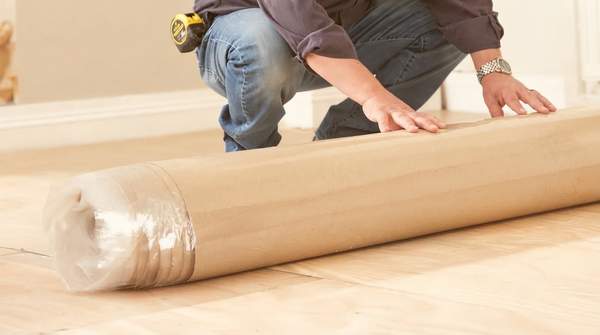
Its ideal pairings are gyms, high-traffic areas, and busy households with kids and pets. The cost shows up in labor and handling as well as materials: a rubber roll is heavy and hard to carry up to an upper unit, more expensive per square foot installed, and harder to cut cleanly. That is why Potomac Floors calls rubber "overkill" in a typical condo with a standard IIC 50 spec—but the only material that gets the job done when a project demands IIC 60+ performance, such as high-end condominiums with strict HOA rules about impact noise.
Underlayment Performance and Cost Comparison
The table below juxtaposes the three materials across the decision factors that matter most. Read down each column against your own priorities: if maximum sound dampening drives the project, the acoustic column points to rubber; if a moisture barrier on a budget is the goal, the moisture column points to foam composite. This is how you identify the material that offers the best balance of performance and cost for your specific room and flooring type.
| Material | Acoustic Performance | Moisture Resistance | Thermal Insulation | Longevity | Typical Applications | Cost |
|---|---|---|---|---|---|---|
| Cork | Good sound dampening; cellular structure absorbs footsteps, voices, appliance noise; quieter, firmer feel than foam; suitable where IIC 50 specs apply | Resists mold and mildew; may lack an integrated vapor barrier, so a separate one is needed over concrete slabs | Good; a natural insulator that traps heat well | Holds its shape over the years | Homes prioritizing warmth and comfort; eco-conscious projects; typical condos with IIC 50 requirements | Usually more than foam; better value than rubber at IIC 50 specs |
| Foam composite | Basic sound dampening; poor absorption compared with cork and rubber; not ideal for high-impact noise | Most products include a built-in film vapor barrier—key feature for basement LVP over concrete slabs | Limited | Compresses over time; may need replacing at the next floor cycle | Laminate and floating LVP; budget remodels; rentals; low-traffic areas | Most affordable of the three |
| Rubber | Superior sound dampening; excellent for impact noise; capable of meeting IIC 60+ specs | Almost completely waterproof; suited to basements and below-grade renovations | Not as warm as cork, but more temperature-stable than foam | Does not compress, degrade, or crumble | Gyms; high-traffic areas; busy households; high-end condos with strict HOA rules | Most expensive per square foot installed; heavy rolls and harder cuts add labor cost |
Making Your Choice: A Scenario-Based Decision
The decision is a trade-off between cost, acoustic performance, moisture resistance, and longevity, and it hinges on your subfloor, your room's location, and your flooring type. Working through common scenarios turns the table above into a concrete answer.
- Basement LVP over a concrete slab. The moisture barrier built into most foam composites is the feature you actually need, and acoustic performance is a secondary benefit. Foam composite is the budget-friendly answer here; rubber also handles below-grade moisture well if durability or impact noise matters more than cost.
- Second-floor room or condo with a neighbor below. With a standard IIC 50 spec, cork is the better value—rubber is overkill. Where an HOA demands IIC 60+, rubber is the only material of the three that reliably gets the job done.
- Cold-climate bedroom or living space where warmth matters. Cork's natural insulation traps heat exceptionally well and adds a firm, quiet feel underfoot, which is why it is favored in older, colder-climate homes.
- Tight budget, single-family home, no noise constraints. A quality foam composite under floating LVP or laminate is the right tool—soft underfoot, easy to install, and cheap, provided you accept a shorter underlayment life.
- Rental turnover floors. Where the underlayment does not need to outlive the floor and cost per unit drives the decision, foam composite again wins on price.
- High-traffic areas, gyms, or busy households with kids and pets. Rubber's resistance to compression and crumbing makes it the durable, if pricier, choice.
Before you buy, check the chosen underlayment's published specifications—its IIC rating, whether a moisture barrier is integrated or must be added separately, and the material type—against the requirements of your specific scenario. The measurable indicator of a good decision is simple: the specs on the roll you purchase directly match your subfloor condition, your acoustic requirement (IIC 50 versus IIC 60+), and your longevity expectations. If they do, you have the right underlayment for the project.