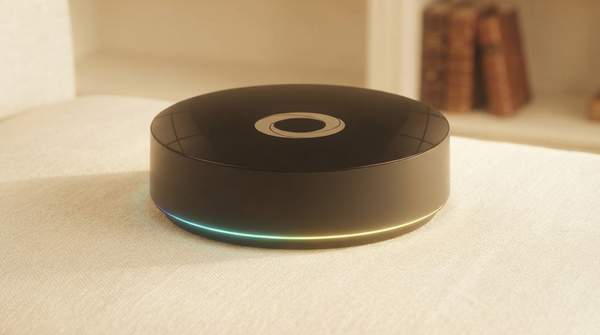
The best smart home hub for your home is the one that matches three things: the ecosystem your household already lives in, the protocols your devices speak, and how much of your automation you want running locally rather than in the cloud. If you are deep in Apple's world, a HomePod or Apple TV fills the hub role. Alexa households can start with an Amazon Echo (4th Gen), which doubles as a Matter controller and Thread border router. Power users who want one hub to control almost everything should look at Homey Pro, while SmartThings households have the Aeotec Smart Home Hub. This guide explains the decision factors and compares the leading options side by side.
Choosing Your Smart Home Hub: Key Decision Factors for 2026
Before comparing hardware, narrow the field with a few practical checks. Treasure Valley Solutions, an installer that compared hubs in late 2026, recommends verifying the exact accessory model rather than trusting a brand or protocol label, since a "supported" device still needs to expose the controls your routine requires. The same guide stresses distinguishing between Zigbee, Z-Wave, Thread, Wi-Fi, and Ethernet radios, because supporting one does not imply supporting another.
EcoFlow's 2026 buying guide adds two more factors: ecosystem fit and processing location. Staying within your existing ecosystem simplifies pairing, voice control, and automation, while hubs that process automations locally respond faster and keep working during internet outages. Finally, consider who will maintain the system—updates, broken integrations, and replacements all need an owner.
Understanding Smart Home Communication Protocols
Protocols are the languages your devices speak. Zigbee and Z-Wave are established low-power mesh protocols used by many sensors, bulbs, and locks. Thread is the newer low-power mesh protocol that Matter uses for local device communication, and Matter is the interoperability standard that lets one device work across Apple Home, Google Home, and Alexa. Google's own compatibility documentation notes that Matter-certified hubs and bridges can even bring non-Matter Zigbee or Z-Wave devices into a Matter ecosystem.
Many modern hubs now combine two roles: the Thread border router, which moves packets for the Thread network, and the Matter controller, which commissions and runs devices. Microcontrollers Lab's buying guide for Thread border routers advises buying all-in-one units that combine both functions, since they avoid the most common pairing headaches. Matter's Multi-Admin feature then lets you share a Matter device into multiple ecosystems, so your initial platform choice is not entirely permanent.
Ecosystem Alignment: Apple, Google, or Alexa?
Your ecosystem choice should follow the app and voice assistant your household actually uses. A Matter guide by Frank-Oliver Grün explains that Matter's Multi-Admin Mode allows parallel operation across systems—an Apple Home setup can also listen to Echo speakers or Android apps—but only for Matter end devices like lamps, sockets, and thermostats. Matter hubs themselves cannot be shared across fabrics.
Google's compatibility page positions Google Home as a unifier of "Works with Google Home" partner devices, Matter-built devices, and Nest hardware. Microcontrollers Lab's advice is simpler still: buy the border router that belongs to the app you use every day—an Echo for Alexa, a Nest device for Google Home, an Apple TV or HomePod for Apple Home—and rely on Multi-Admin to share devices to other apps later.
Local vs. Cloud Control: Privacy and Reliability
Local control means commands and routines run inside your home rather than on an outside server. Hubs that process locally can respond faster and keep some functions alive during internet outages, which matters for lighting, locks, and security. A comparison by Your Matter Home rates local processing as full in Apple Home and SmartThings hubs, but only partial in Google Home and Amazon Alexa.
The trade-off is convenience versus autonomy. Cloud-dependent hubs depend on the manufacturer's servers and an internet connection, while local-first hubs keep working offline but may require more setup. If reliability during outages is a priority, Treasure Valley Solutions recommends identifying exactly which commands and routines run locally before buying.
Smart Home Hub Comparison for 2026
The table below compares the leading hubs across ecosystem, protocol support, and best-fit use case. Protocol details come from MatterCatalog's roundup of Thread-capable speakers, Matter Alpha's Thread border router list, and the comparison published by Your Matter Home.
| Hub | Primary Ecosystem | Protocol Support | Best For / Key Feature |
|---|---|---|---|
| Apple HomePod mini / HomePod (2nd Gen) / Apple TV 4K | Apple Home | Matter controller and Thread border router (per Apple's own pages) | Deep Apple integration; full local processing |
| Amazon Echo (4th Gen) | Amazon Alexa | Zigbee, Matter over Wi-Fi, Matter controller and Thread border router | Budget-friendly Alexa hub with broad Matter/Thread support |
| Aeotec Smart Home Hub | SmartThings | Zigbee, Z-Wave, Matter, Thread (v3 and v4 models) | SmartThings households; strong local processing and automations |
| Homey Pro | Multi-protocol | Matter, Zigbee, Z-Wave, Thread, infrared | Power users wanting one hub to control almost everything |
| Google Nest Hub (2nd Gen) / Nest Hub Max | Google Home | Matter controller and Thread border router | Google-centric homes; partial local processing |
Reading the table, a pattern emerges: the speaker-shaped hubs (Echo, HomePod, Nest Hub) serve double duty as Matter controllers and Thread border routers, while standalone hubs like Homey Pro and the Aeotec add Zigbee and Z-Wave radios for older devices. That is the real dividing line—ecosystem hubs cover Matter and Thread well but need bridges for legacy radios.
Making Your Choice: Best Hub for Your Needs
Start with what you own. Treasure Valley Solutions' verdict for 2026 is to pick the hub for your intended automations, not the longest compatibility list, and to start from the devices you already have and the interface your household understands. Replacing a functioning ecosystem adds work without automatically improving daily use.
In practice: choose Apple's HomePod or Apple TV if your home runs on iPhones and you want full local processing. Choose the Echo (4th Gen) for an inexpensive Alexa entry point with Matter and Thread built in. Choose the Aeotec hub if you are in SmartThings, and Homey Pro if you want maximum protocol coverage and are willing to pay a premium and climb a learning curve.
Your Next Step: Choosing the Right Hub
Select a smart home hub that aligns with your primary smart home ecosystem (Apple, Google, or Alexa), supports the communication protocols of your current and desired devices (especially Matter and Thread), and offers the level of local control you prefer. The measurable indicator of success: the chosen hub successfully integrates existing devices and new Matter/Thread devices, and automations function reliably. Test that outcome before committing fully—pair one existing device and one new Matter device, run your most important automation, and confirm it survives an internet outage if local control matters to you.
Sources
- Best Smart Home Hubs: Local Control Wins in 2026 — Treasure Valley Solutions
- Smart Home Hub 2026: Best Picks and How to Choose One — ENERGY
- Compatible Smart Home Devices — Google Home
- Best Thread Border Routers for Matter: 13 Picks Compared — Microcontrollers Lab
- How to Set Up a Smart Home with Matter – Step by Step — matter-smarthome
- Matter Devices List 2026: Complete Guide — Your Matter Home
- Matter Smart Speakers: Which Have Thread Built In? (2026) — MatterCatalog
- Thread Border Routers: The complete list of what you can buy today — Matter Alpha